Which MT5 indicator is best for reversal setups?
If you trade reversals, channel-based and ATR-driven tools are usually the strongest fit. They help identify overbought and oversold zones, exits beyond the band, and returns back into the range.
A collection of 6 tools for reversals, channels, volatility analysis, and adaptive trend filtering.
Each indicator is built for practical chart work: clean visual logic, flexible settings, and direct access through Telegram.
All channel, trend, and adaptive models are listed below. If you want access to any of them, just contact us via Telegram.
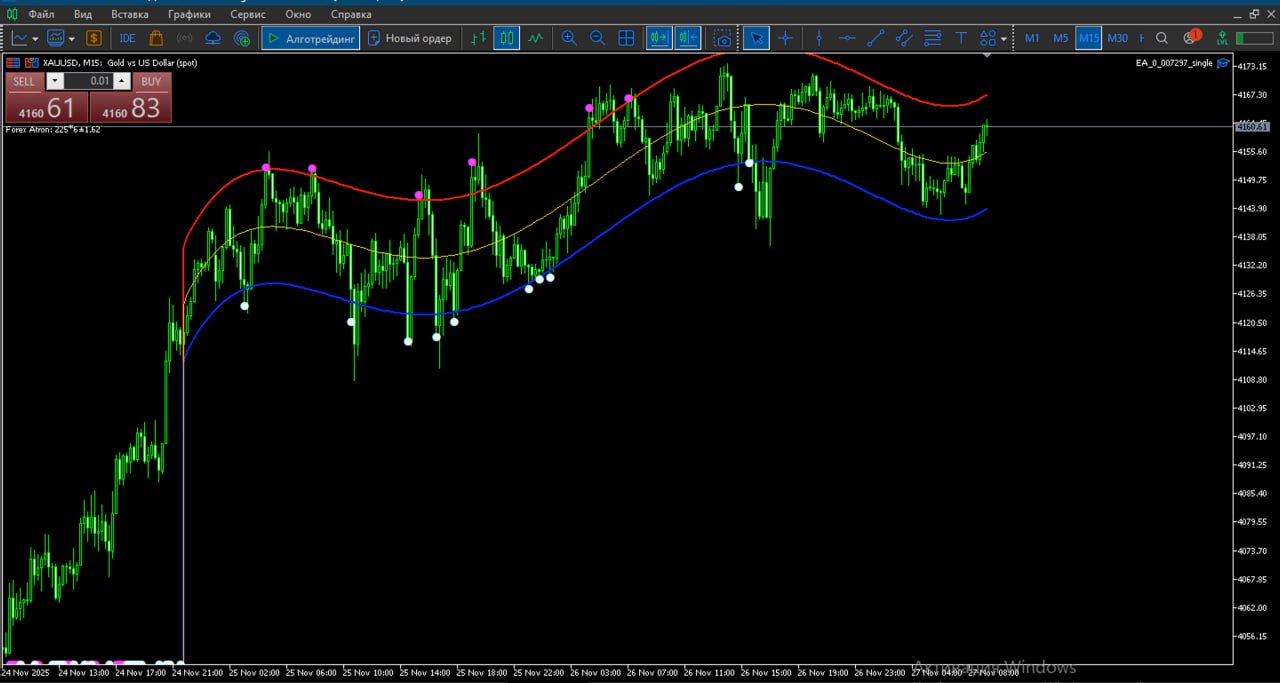
This indicator builds an adaptive polynomial regression channel that follows price action. It is designed for mean-reversion entries, counter-trend trades, and flat market conditions.
How does it work? The indicator draws a central trend line and two outer borders based on standard deviation. When price becomes overbought or oversold, signal dots appear near the channel edges.
Key features:
Who is it for? Traders who work inside ranges, look for reversal points, and want clear visual volatility boundaries.
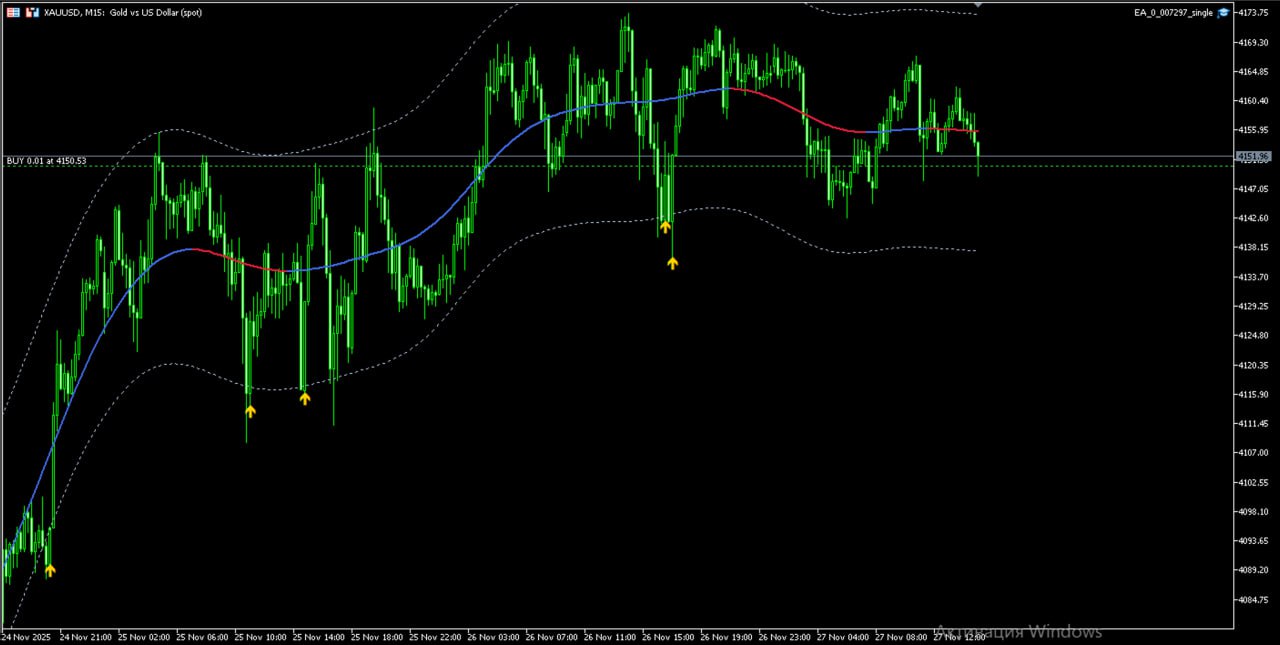
How does it work? This indicator builds a dynamic channel that adapts to current market volatility through ATR.
Signals: Arrows appear when price exits the channel and returns back inside. These zones often give strong reversal or corrective entries.
Advantages:
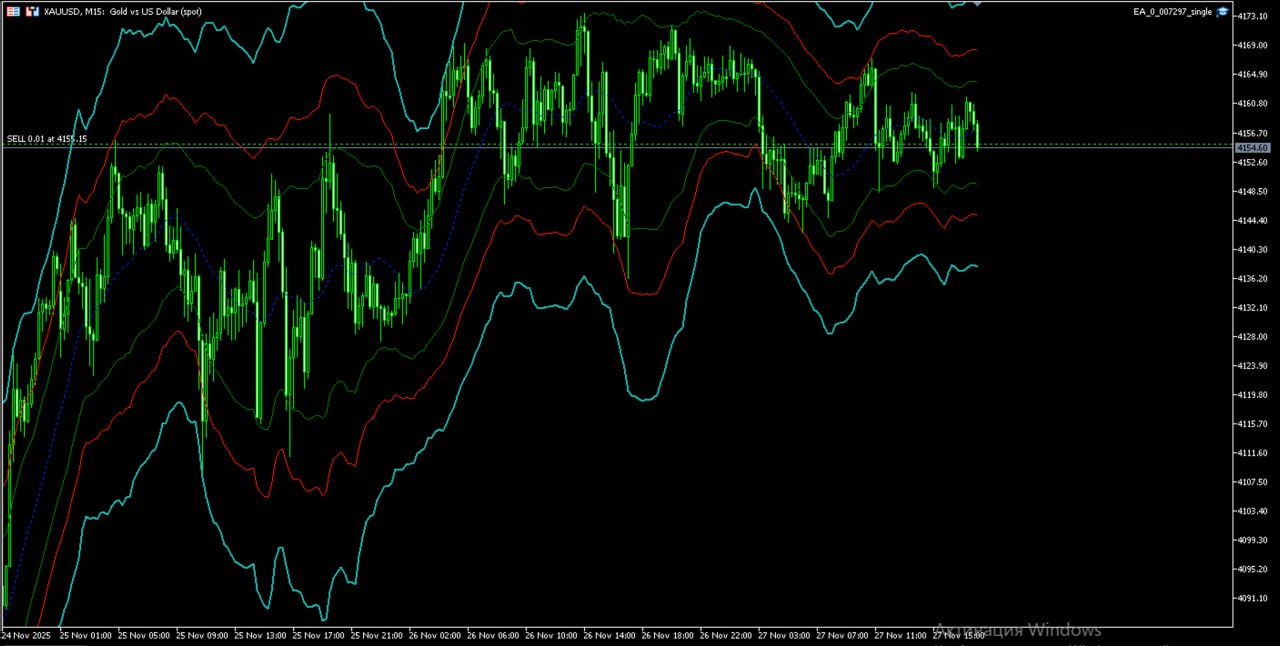
Bands + Fibo for MT5 is a hybrid of a classic moving average and Fibonacci-based volatility levels.
How does it work? Instead of standard deviation, the channel is built using ATR. The center is an SMA, while outer levels are projected with Fibonacci coefficients: 1.618, 2.618, and 4.236.
Why use it?
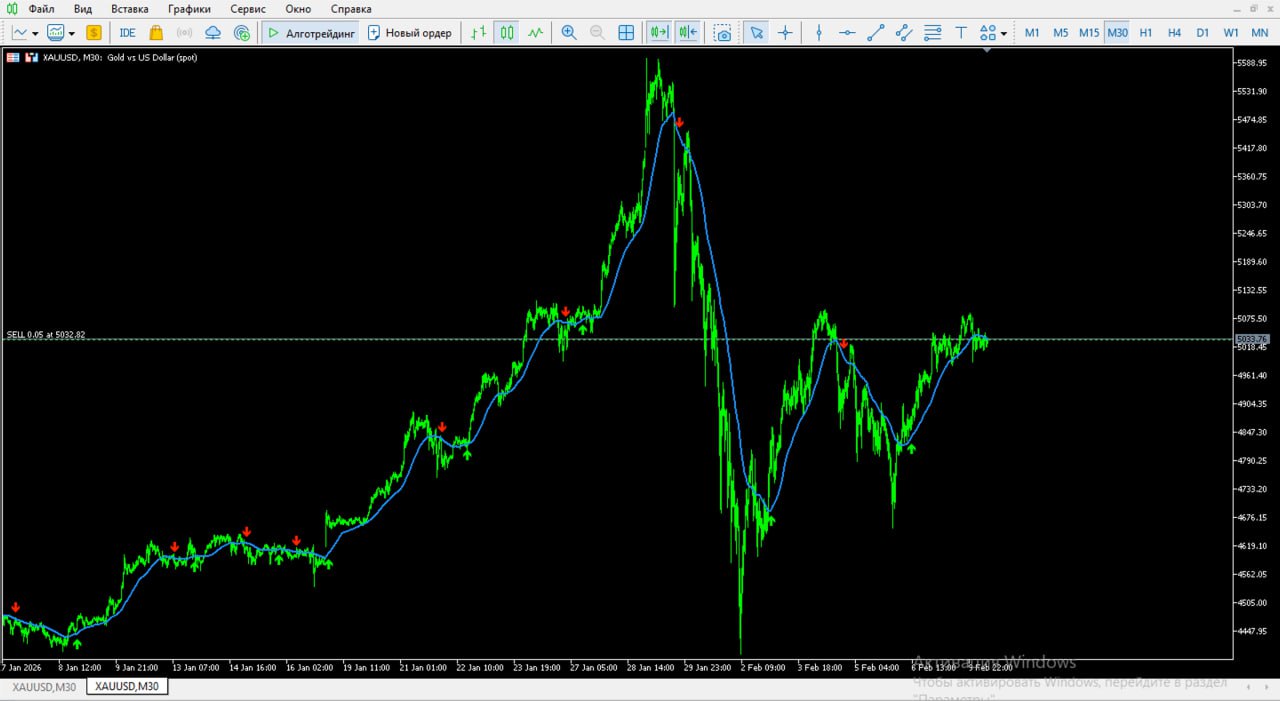
This indicator merges two classic moving averages into one adaptive trend line and filters market noise. It is built for clean trend-change detection.
How does it work? Fast and slow MA values are transformed into a single smoothed trend center. Signal arrows appear only after a confirmed cross and bar close.
Key features:
Who is it for? Traders who prefer conservative trend-following entries and cleaner charts.
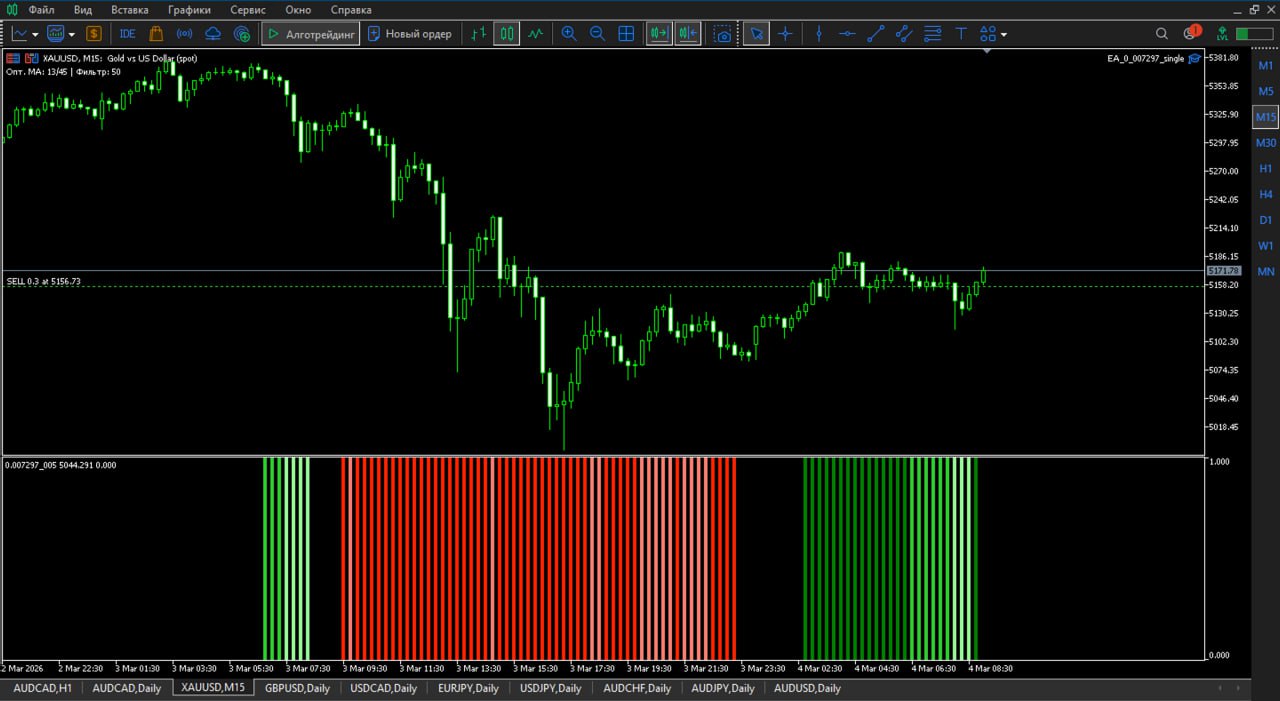
This tool upgrades trend analysis by using real-time parameter auto-selection. It removes the guesswork from choosing moving-average periods.
How does it work? It evaluates the interaction between three moving averages and closing price. An optimization module scans history and selects parameter combinations with the strongest mathematical efficiency for the current timeframe.
Key features:
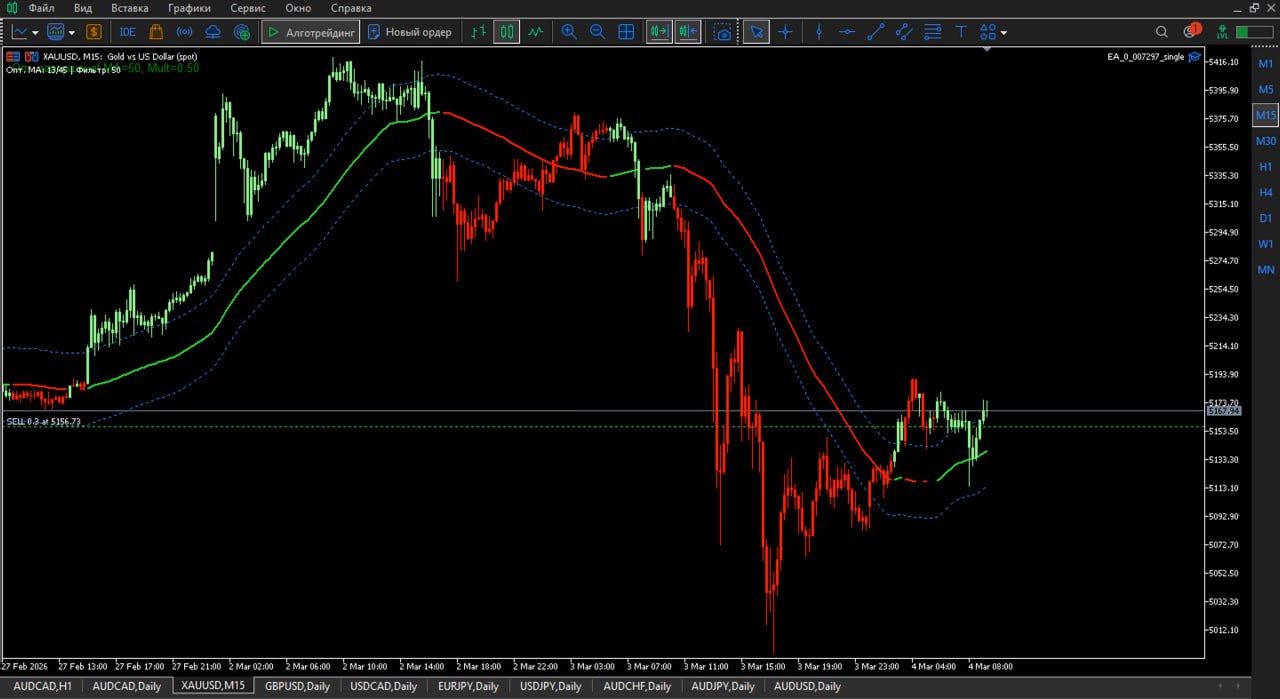
This professional indicator rethinks classic channel trading. It builds adaptive boundaries around a moving average and optimizes its own settings using historical analysis.
How does it work? The indicator draws a central MA line and outer bands. It also changes candle and line colors depending on trend direction to keep chart reading fast and visual.
Main modes and signals:
Key features:
This page targets common search intents around MetaTrader 5 tools: MT5 indicator, channel indicator, trend indicator, reversal indicator, volatility indicator, XAUUSD indicator, and adaptive indicators with auto-optimization.
If you trade reversals, channel-based and ATR-driven tools are usually the strongest fit. They help identify overbought and oversold zones, exits beyond the band, and returns back into the range.
Yes. The catalog includes channel models for mean reversion, bounce trades, breakout logic, and dynamic support and resistance analysis.
Yes. The lineup is suitable for XAUUSD analysis and can also be adapted to other symbols and timeframes through adjustable periods, channel width, and volatility filters.
Yes. If you need a tool for channels, trend following, reversals, or noise filtering, use the Telegram buttons and we will point you to the most relevant indicator.
We can help you choose the right model for channels, reversals, trend filtering, or volatility tracking and explain how to tune it for your timeframe.